Begin of page section:
Page sections:

  • Go to contents (Accesskey 1)
  • Go to position marker (Accesskey 2)
  • Go to main navigation (Accesskey 3)
  • Go to sub navigation (Accesskey 4)
  • Go to additional information (Accesskey 5)
  • Go to page settings (user/language) (Accesskey 8)
  • Go to search (Accesskey 9)

End of this page section. Go to overview of page sections

Begin of page section:
Page settings:

English en
Deutsch de
Search
Login

End of this page section. Go to overview of page sections

Begin of page section:
Search:

Search for details about Uni Graz
Close

End of this page section. Go to overview of page sections


Search

Begin of page section:
Main navigation:

Page navigation:

  • University

    University
    • About the University
    • Organisation
    • Faculties
    • Library
    • Working at University of Graz
    • Campus
    Developing solutions for the world of tomorrow - that is our mission. Our students and our researchers take on the great challenges of society and carry the knowledge out.
  • Research Profile

    Research Profile
    • Our Expertise
    • Research Questions
    • Research Portal
    • Promoting Research
    • Research Transfer
    • Ethics in Research
    • Commission for Scientific Integrity
    Scientific excellence and the courage to break new ground. Research at the University of Graz creates the foundations for making the future worth living.
  • Studies

    Studies
    • Prospective Students
    • Students
    • Welcome Weeks for First Year Students
  • Community

    Community
    • International
    • Location
    • Research and Business
    • Alumni
    The University of Graz is a hub for international research and brings together scientists and business experts. Moreover, it fosters the exchange and cooperation in study and teaching.
Topics
  • Sustainable University
  • Researchers answer
  • Work for us
Close menu

End of this page section. Go to overview of page sections

Begin of page section:
You are here:

University of Graz News Gewinn und Gefahr: Forschende der Uni Graz haben KI-Wahrnehmung in der Bevölkerung erhoben

End of this page section. Go to overview of page sections

Tuesday, 25 August 2026

Rescue and risks: Researchers have surveyed public perceptions of AI

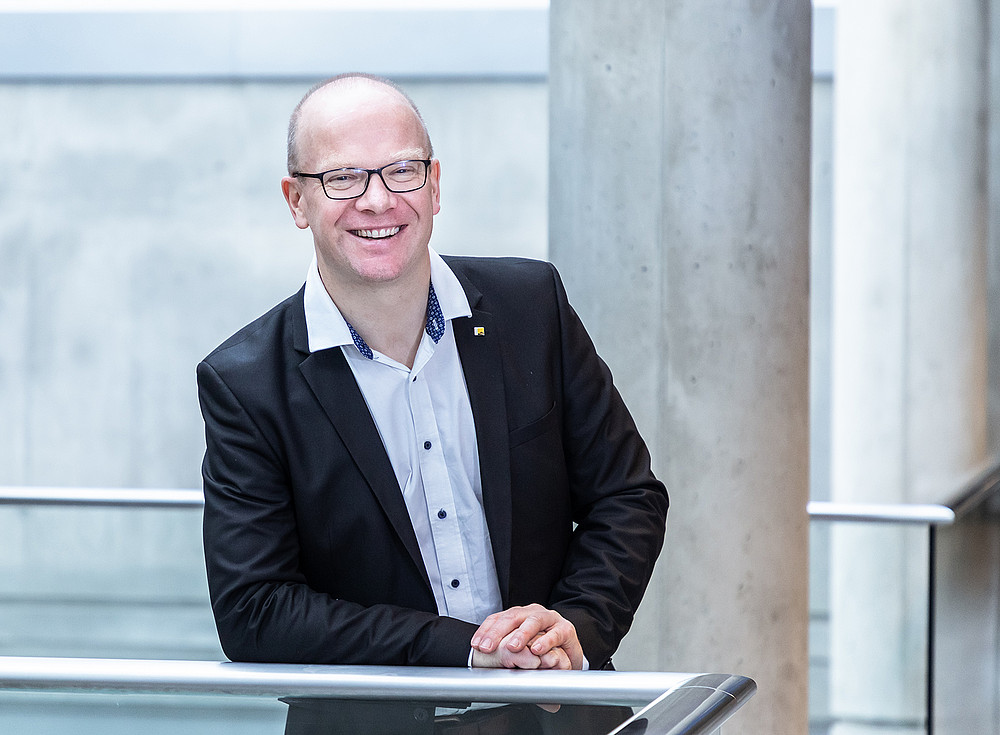
Stefan Thalmann leans on a railing and looks very friendly ©Jorj Konstantinov
©Jorj Konstantinov

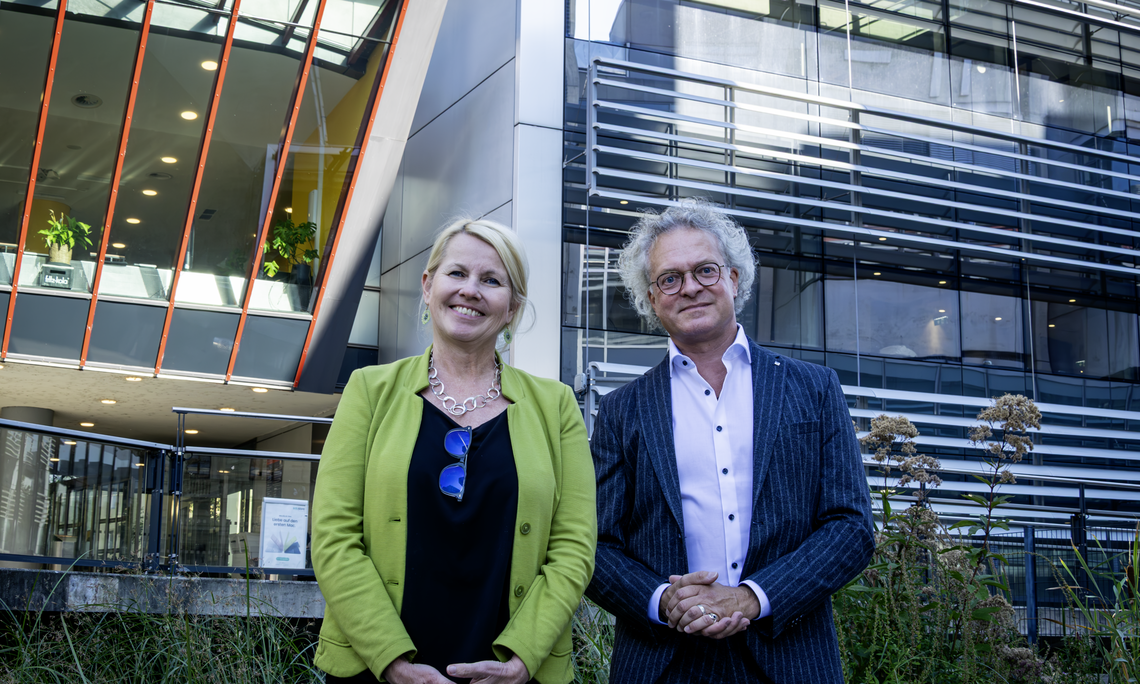
Data researcher Stefan Thalmann has investigated how risky AI applications are perceived by the Austrian public. The findings differ from the assessments in the AI Act. Photo: GEOPHO

The use of artificial intelligence has had to be made transparent since 2 August 2026. The EU’s AI Act, which has been in force since then, also sets out how risky an application is and which security measures apply as a result. However, the assessment of risks by the legislation differs in some cases significantly from the perceptions of the Austrian public. This is the finding of a representative study carried out by data scientist Stefan Thalmann from the University of Graz and his team.

“The risk categorisation in the AI Act is opaque and difficult to understand for most people. It would make sense to involve members of the public and make adjustments,” recommends the researcher, citing two examples: “Automated fatigue detection in lorries directly intervenes in driving behaviour and processes potentially sensitive biometric data. EU law therefore prescribes strict protective measures.” For the people surveyed – as well as for many lorry drivers – however, the benefits for road safety would be the main priority. “The legal requirement is consequently seen as excessive and a hindrance,” adds Thalmann.
Conversely, many customers feel uncomfortable when they are expected to interact with chatbots on various internet portals. “Although these do not request sensitive data or intrude on personal spheres – and are therefore classified as low-risk under the AI Act – consumers have data protection concerns and fear manipulation or false information,” the researcher found. “Policymakers should therefore place greater emphasis on providing clear information and raising awareness, for example through easily understandable labelling of AI risks,” recommends Thalmann. Furthermore, digital literacy needs to be strengthened: “Those who are familiar with technology are also better able to assess the risks posed by artificial intelligence,” the expert cites as a further finding of his study. People who perceive the technology as particularly risky are hardly persuaded even by additional protective measures. 

The study was carried out by an interdisciplinary team from the Smart Regulation research area, in collaboration with Graz University of Technology. The findings have been published in the journal Computer Law & Security Review:
Hanna Kröll, Jürgen Fleiß, Magdalena Eder, Elisabeth Lex, Stefan Thalmann: *AI risk perceptions and the effect of AI Act Safeguards. Results from a representative population sample*
created by Dagmar Eklaude

Related news

Nikotinbeutel an steirischen Hochschulen: Viele nutzen sie, Risiken werden unterschätzt

Eine Online-Umfrage der Universität Graz und VIVID – Fachstelle für Suchtprävention – unter 623 Studierenden zeigt: Fast ein Viertel konsumiert regelmäßig Nikotinbeutel. Praktische Vorteile und diskreter Konsum stehen im Vordergrund, gesundheitliche Risiken werden oft geringer eingeschätzt als bei anderen Nikotinprodukten.

Frauen-geführte Farmer Producer Companies in indischen Tribal Communities

Am Institut für Marketing der SoWi-Fakultät der Universität Graz untersuchen Dr. Ankita Singh und Professor Vishal Kashyap, wie von Frauen geführte Farmer Producer Companies (FPCs) in indischen Tribal Communities ihren Weg in den Markt finden und unter schwierigen Rahmenbedingungen nachhaltige Geschäftsmodelle entwickeln.

Univ.-Prof. Dr. Ulrich Pferschy mit dem Test of Time paper Award ausgezeichnet!

Große Anerkennung für die Forschung an der Sozial- und Wirtschaftswissenschaftlichen Fakultät: Prof. Ulrich Pferschy wurde gemeinsam mit seinen Co-Autoren Jakob Puchinger und Günther R. Raidl mit dem „Test of Time Paper Award“ des INFORMS Journal on Computing ausgezeichnet.

Oral History in Graz: Wie Unternehmensgeschichte zur Zukunftsressource wird

Das Grazer Oral-History-Archiv macht sichtbar, wie Unternehmen aus Erinnerungen lernen können: Gespräche mit Unternehmer:innen und Zeitzeug:innen liefern wertvolle Einblicke in Krisenbewältigung, Wandel und den Umgang mit schwierigen Kapiteln der Unternehmensgeschichte.

Begin of page section:
Additional information:

University of Graz
Universitaetsplatz 3
8010 Graz
Austria
  • Contact
  • Web Editors
  • Moodle
  • UNIGRAZonline
  • Imprint
  • Data Protection Declaration
  • Accessibility Declaration
Weatherstation
Uni Graz

End of this page section. Go to overview of page sections

End of this page section. Go to overview of page sections

Begin of page section:

End of this page section. Go to overview of page sections